
What Does Roasting Actually Do to Coffee?


Green coffee doesn't look much like the coffee you buy in a bag.
The beans are usually green, sometimes with a slightly greyish or blueish colour, and if you smell them, they don't smell much like coffee either.
Then we put them in a roaster.
A few minutes later, they're brown, fragrant and smelling unmistakably like coffee.
So what happened?
Quite a lot, actually.
Roasting is where we take a green coffee seed and use heat to transform it into something that can be ground and brewed into the drink we all recognise as coffee.
And while coffee roasting can get extremely technical, you don't need a chemistry degree to understand the basics.
Let's have a look at what happens.
Green coffee is surprisingly different
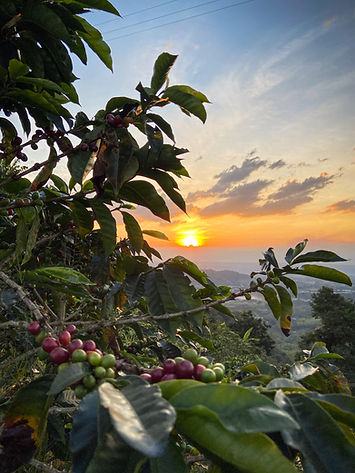
Before roasting, coffee is a seed inside a coffee cherry.
Once the cherry has been removed and the seed has been processed and dried, we have what we call green coffee.
At this point, the coffee is quite hard and dense.
It doesn't smell like freshly brewed coffee.
It doesn't taste particularly nice if you try to chew it.
And you definitely wouldn't grind it up and put it into your espresso machine.
It needs roasting first.
The job of the roaster is essentially to apply heat in a controlled way to transform the green coffee into something delicious.
And this is where things get interesting.
First, the coffee heats up
When the green coffee goes into the roaster, the temperature of the beans starts to rise.
The beans contain moisture, and as they heat up, that moisture begins to evaporate.
The coffee also starts changing colour.
Green becomes yellow.
Yellow becomes increasingly brown.
And gradually, the aromas start changing too.
The smell coming from the roaster changes from something grassy and cereal-like to something much more recognisable as coffee.
The beans are going through a whole series of chemical reactions.
You don't need to remember the names of all of them.
The important thing to know is that heat is transforming the compounds inside the coffee and creating new flavours and aromas.
This is where the magic starts.
Then comes the browning
As the temperature continues to rise, the coffee begins to brown.
This is partly down to something called the Maillard reaction.
You've probably experienced it without knowing its name.
Think about toast.
Raw bread doesn't smell or taste anything like toast.
Put it under some heat and suddenly you get that familiar brown colour and all those delicious toasted aromas.
The same sort of thing happens with coffee.
Heat causes sugars and amino acids in the coffee to react, creating many of the flavours and aromas we associate with roasted coffee.
Chocolate.
Nuts.
Caramel.
Toast.
And plenty of other flavours.
This is one of the reasons roasting is so important.
The roaster isn't simply changing the colour of the beans.
They're creating a huge amount of what we eventually experience as flavour.
And then… First Crack
If you've ever stood next to a coffee roaster while coffee is roasting, there is a point when something rather interesting happens.
Crack.
Then another.
And another.
The coffee starts making a sound remarkably similar to popcorn popping.
This is called First Crack.
It happens because pressure has built up inside the coffee beans as water turns into steam and other gases are released.
Eventually, the pressure becomes enough to cause the structure of the bean to fracture.
And you hear it.
Crack.
Crack.
Crack.
The coffee has reached an important stage in its roast.
First Crack is useful to the roaster because it gives us an audible indication of where the coffee is in its development.
It's also one of the points where things start getting particularly interesting.
What happens after First Crack?
The coffee isn't finished just because it has cracked.
In fact, this is where the roaster has to make some important decisions.
Once First Crack begins, the coffee continues to develop.
The longer we keep applying heat, the more the flavour profile changes.
This is where you'll sometimes hear coffee roasters talking about Development Time.
Development Time is simply the amount of time the coffee spends roasting after First Crack has started.
You might also hear about the Development Time Ratio, or DTR.
Don't let the name scare you.
It's basically a way of expressing the development time as a percentage of the total roasting time.
For example, if a roast took 10 minutes from start to finish and the coffee spent 1½ minutes developing after First Crack, the Development Time Ratio would be 15%.
It's a useful number for roasters because it gives them a way of describing and comparing what happened during the roast.
But here's the important bit:
There isn't one magic DTR that makes coffee taste good.
Different coffees need different approaches.
So what does the roaster actually control?
Quite a lot.
The roaster controls how quickly the coffee heats up, how much heat is being applied at different stages, when First Crack happens and how the coffee develops afterwards.
The exact approach depends on the coffee.
A dense coffee grown at high altitude may behave differently from another coffee grown somewhere else.
A natural coffee may behave differently from a washed coffee.
A larger bean may behave differently from a smaller one.
And different coffees have different characteristics that the roaster may want to emphasise.
This is why roasting isn't simply:
“Put beans in. Make brown. Take beans out.”
If only it were that easy.
Light roast, medium roast, dark roast
You've probably heard people talk about light, medium and dark roast.
These aren't perfectly defined categories, and different roasters can use the terms slightly differently.
But broadly speaking, the longer and more intensely coffee is roasted, the darker it becomes.
A lighter roast generally preserves more of the characteristics that came from the coffee itself.
You might notice more acidity, fruit, floral notes or other distinctive flavours.
A darker roast generally produces more roast-driven flavours.
Think chocolate, toast, caramel and deeper, sometimes smokier flavours.
But here's something worth remembering:
Light roast doesn't automatically mean better coffee.
And dark roast doesn't automatically mean bad coffee.
They're different styles.
The right roast depends on the coffee, what the roaster is trying to achieve, and what you like drinking.
Can roasting hide defects?
This is where the roaster has to be careful.
If green coffee has defects or undesirable characteristics, roasting it darker can sometimes make those characteristics less obvious by producing stronger roast flavours.
But roasting isn't a magic eraser.
You can't turn poor green coffee into exceptional coffee simply by roasting it very dark.
Good roasting starts with good green coffee.
The job of the roaster is to take what's already there and bring out the best of it.
The roaster is looking for balance
This is probably the simplest way I can describe what we're trying to do.
We're looking for balance.
We want enough development to make the coffee sweet, soluble and enjoyable to brew.
But we don't want to roast away all the characteristics that make that particular coffee interesting.
Imagine you've bought a beautiful orange.
You could cook it until it tastes like something completely different.
Or you could try to bring out what makes that orange interesting in the first place.
Coffee is a little like that.
The green coffee already has potential.
The roast determines how much of that potential makes it into the cup.
Roasting changes the bean quite dramatically
By the end of the roast, the coffee looks completely different.
The beans have become brown.
They have expanded.
They've lost moisture and mass.
They're much more brittle and easier to grind.
And they contain a completely different collection of aromas and flavour compounds.
They also contain gases, particularly carbon dioxide, that were created during roasting.
This is one of the reasons freshly roasted coffee needs a little time before it reaches its best.
The coffee is still changing after it leaves the roaster.
Which is why the date on your coffee bag matters.
Freshly roasted doesn't necessarily mean “drink it immediately”.
But that's a subject for another article.
So what does roasting actually do?
If I had to explain it in one sentence, I'd say:
Roasting transforms green coffee from a hard, fairly uninteresting seed into the aromatic, flavourful coffee we can grind and brew.
But the really interesting part is that the roaster isn't creating everything from scratch.
The coffee already has a story.
Where it was grown.
Which variety it is.
The climate.
The soil.
How it was harvested.
How it was processed.
How it was dried and stored.
All of those things influence what the roaster starts with.
The roast is another chapter in that story.
And the roaster's job is to decide how to write it.
Sometimes that means keeping the roast relatively light and letting the coffee's fruit and floral characteristics shine.
Sometimes a little more development brings out sweetness and body.
Sometimes a darker roast is exactly what we're looking for.
There isn't one universal answer.
And that's what makes roasting so fascinating.
A few minutes in a hot drum can take a green seed that doesn't smell remotely like coffee and turn it into something that smells like chocolate, caramel, fruit, flowers, nuts or toast.
And then, of course, we grind it, add water and drink it.
Which is when the next part of the story begins.
— Henning Al-Gharb Coffee Roasters, Algarve
☕ Want to make better coffee at home?
Join The Friday Filter.
One useful coffee tip every Friday from the Al-Gharb Coffee Roasters.
Brewing advice, coffee experiments, things we've learned from roasting—and occasionally things we've learned by getting it completely wrong.
No coffee snobbery. Just better coffee.



Comments