
What Is Specialty Coffee?

I've been in the coffee business for eight years now, and I don't think a day goes by without someone asking me:
“What's specialty coffee?”
Usually followed by:
“What's different about it?”
They're normally perfectly happy, reasonably ignorant coffee drinkers, going about their day, who have made the fatal mistake of asking me that question.
I imagine they're in that scene from The Matrix, eating the steak just before they realise they've never really tasted steak before.
The problem is, I could make this very complicated.
I could start talking about coffee varieties, altitude, processing methods, traceability, cupping scores, green coffee quality and everything that happens between the coffee plant and the cup.
And all of those things matter.
But most people don't actually want a lecture.
They want a decent cup of coffee that tastes good, at a price they're happy to pay.
And I think that's probably a better place to start.
So what actually is specialty coffee?
The slightly annoying answer is that there isn't one simple thing that magically turns a coffee into “specialty coffee”.
For a long time, specialty coffee was largely explained through quality scores. Coffee professionals assess coffee using a recognised scoring system, and coffees scoring 80 points or more on the traditional 100-point scale were generally considered specialty coffee.
That's useful.
But it doesn't really explain what makes specialty coffee interesting.
For me, it's about recognising that coffee is an agricultural product that can have an extraordinary amount of flavour and character.
And getting that flavour into your cup takes care.
It starts with the people growing the coffee, continues through harvesting and processing, then through the work of the people buying and roasting the green coffee, and finally with whoever makes the drink you're holding.
There are a lot of people involved in your morning coffee.
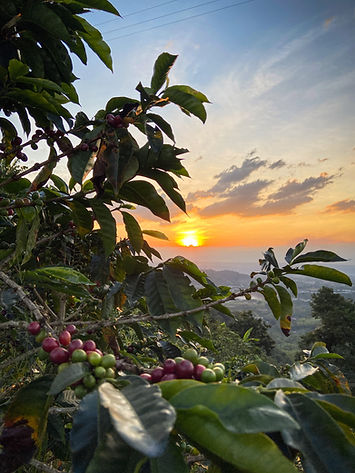
It starts with the plant
One of the things I find fascinating about coffee is that the thing we call a coffee bean isn't actually a bean.
It's a seed.
And it's found inside a fruit.
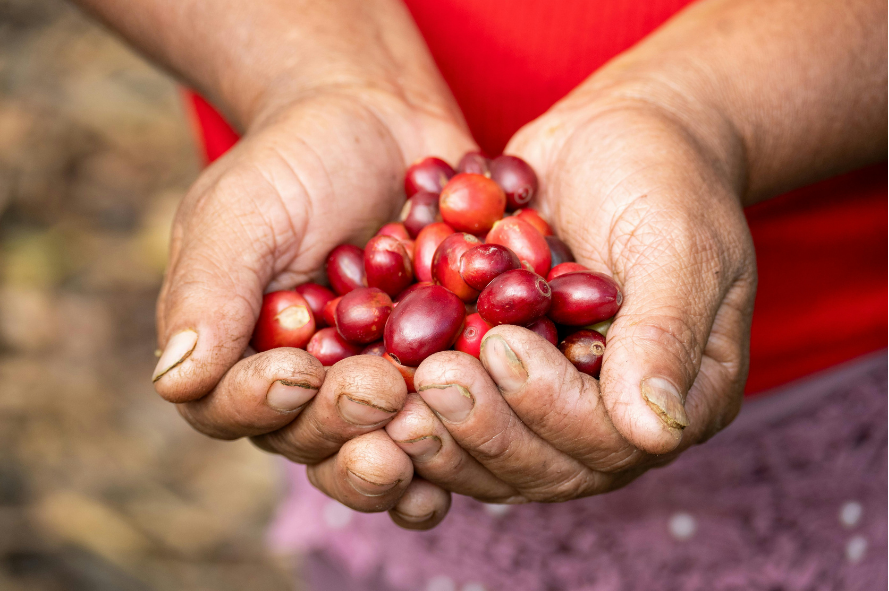
We usually call that fruit a coffee cherry.
That cherry has to be grown, picked when it's ready, processed and dried before the seeds inside it become the green coffee that we eventually roast.
And every one of those steps can make a difference to what ends up in your cup.
Coffee is also remarkably good at picking up characteristics from where and how it is grown.
The variety of the plant, the climate, the altitude, the soil, the amount of rain and sun, and the way the coffee is farmed can all influence the final result.
Which is why two coffees grown in different parts of the world can taste completely different.
And that's before we've even roasted them.
The people matter too

This is the part of specialty coffee that I think gets overlooked.
Specialty coffee isn't just about chasing higher scores and more exotic flavours.
It's also about the people behind the coffee.
Coffee is grown by farmers, picked by workers, processed, dried, transported, bought and sold before it ever reaches a roastery.
The better we understand that chain, the more we realise that the price of coffee isn't simply the price of a bag of beans.
There are people trying to make a living at every stage.
And if we want great coffee to continue being produced, coffee farming needs to be economically sustainable for the people doing it.
There are also some wonderful farming practices in coffee-growing regions. Coffee can be grown beneath shade trees and as part of more diverse agricultural systems, and many farms have a strong relationship with the surrounding environment.
But coffee farming isn't the same everywhere.
There isn't one magical specialty-coffee farm hidden in the rainforest where everything is picked by hand while birds sing in the background.
Coffee is a global agricultural industry, and the reality is much more complicated.
Which is probably what makes it so interesting.
Then comes the roasting

Once the coffee arrives at the roastery, we have another job to do.
We roast it.
Green coffee doesn't taste much like the coffee you're used to drinking. Roasting transforms it, creating the aromas and flavours that we associate with coffee.
And this is where the roaster gets to play.
Good green coffee gives us something to work with.
Rather than simply roasting everything dark and hoping for the best, we can look at what makes a particular coffee interesting and develop a roast profile that brings those characteristics forward.
One coffee might remind you of chocolate and nuts.
Another might have notes of orange, caramel or stone fruit.
Another might be surprisingly floral.
And yes, sometimes you really can taste things like jasmine, peach, cherry or orange blossom in coffee.
I know that sounds slightly ridiculous if you've spent your entire coffee-drinking life putting milk and two sugars into your espresso.
Which brings me to my favourite part.
The FACE
 |  |
Every now and then, someone asks me what specialty coffee is, and rather than explaining it, I make them a coffee.
Because sometimes it's easier to taste the answer.
I'll grind the beans, make a V60 and hand it over.
Let's say it's a washed Costa Rican coffee with a high cupping score.
Now, this person might have been drinking coffee for twenty, thirty or forty years.
They might drink several cups every day.
They might have a very strong opinion about how coffee should taste.
They know coffee.
They know what they like.
And then they take that first sip.
And that's when it happens.
The FACE.
Experienced coffee people will know exactly what I'm talking about.
It's difficult to describe, but it's usually a mixture of surprise, confusion and a little bit of delight.
There's a pause.
They look at the cup.
Then they look at me.
And eventually I hear:
“Wow. It doesn't taste like coffee.”
And I love that moment.
Because my answer is always:
“Yes. But this is what coffee can do.”
Coffee doesn't have to taste like “coffee”
I think that's one of the biggest revelations for people discovering specialty coffee.
We're so used to thinking of coffee as having one particular flavour.
Coffee tastes like coffee.
Maybe it's strong.
Maybe it's bitter.
Maybe it's dark and chocolatey.
Maybe it's milky.
But once you start exploring different coffees, you realise that “coffee” is an enormous category.
A coffee from Brazil can taste completely different from an Ethiopian.
A natural-processed coffee can taste very different from a washed coffee.
A light roast can show completely different characteristics from a darker roast.
And even two coffees from the same country can taste nothing alike.
Suddenly, coffee starts behaving a little bit like wine.
Except, thankfully, you can drink it at breakfast.
Does specialty coffee mean better coffee?
This is where I think we need to be careful.
Specialty coffee doesn't mean that the coffee you've been drinking for years is suddenly bad.
If you love a traditional espresso blend, drink it.
If you like milk in your coffee, put milk in it.
If you want two sugars, have two sugars.
I'm not interested in converting everyone to a particular way of drinking coffee.
What I want to do is show people that there is more out there if they're curious enough to look.
You don't have to stop drinking your usual coffee.
You can simply try something different.
Maybe you'll hate it.
That's fine too.
Coffee is about taste, and taste is personal.
So why does specialty coffee matter?
For me, specialty coffee is about curiosity.
It's about discovering that the little cup sitting on your desk has a much bigger story behind it than you might have imagined.
It's about the farmer who grew the plant.
The people who picked and processed the cherries.
The people who transported and traded the green coffee.
The roaster who decided how to roast it.
The barista who decided how to brew it.
And finally, you.
The person drinking it.
You don't have to know all of that to enjoy a cup of coffee.
But once you start asking questions, there is an awful lot to discover.
And that's what happened to me.
I started looking at coffee and realised how little I actually knew about it.
Eight years later, I'm still discovering things.
And that's probably what I like most about specialty coffee.
I'm not trying to stop people drinking the coffee they already enjoy.
I'm just trying to show them what else coffee can do.
Every now and then, someone takes that first sip, makes The FACE, and says:
“Wow. It doesn't taste like coffee.”
And I get to smile and say:
“Exactly.”
And honestly?
I hope I get to do that for many more years.
— Henning Al-Gharb Coffee Roasters, Algarve
☕ Want to make better coffee at home?
Join The Friday Filter.
One useful coffee tip every Friday from the Al-Gharb Coffee Roasters.
Brewing advice, coffee experiments, things we've learned from roasting—and occasionally things we've learned by getting it completely wrong.
No coffee snobbery. Just better coffee.


_edited_edited.png)

Comments