
10 Fun Facts About Coffee – Things You Probably Didn't Know

Coffee seems pretty straightforward.
You grind some beans, add water, and hopefully end up with something delicious.
But coffee is actually a surprisingly strange little thing. It grows as a fruit, gets called a bean even though it isn't one, changes dramatically when roasted, and somehow manages to produce flavours that remind us of everything from chocolate to strawberries.
Here are ten things about coffee that might make you look at your next cup a little differently.
1. Coffee isn't actually a bean
Let's get the obvious one out of the way.
The things we call coffee beans are actually seeds.
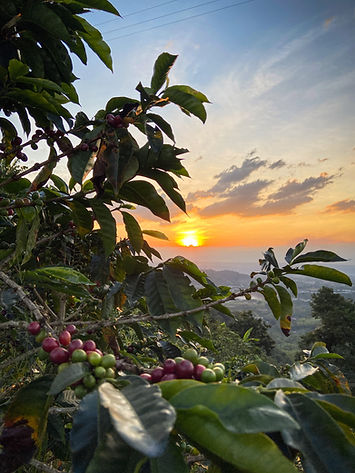
They grow inside the fruit of the coffee plant, usually called a coffee cherry. Remove the skin, pulp and other layers, and eventually you get to the seeds that we roast.
So technically, your morning coffee started life as a piece of fruit.
And yes, calling them “beans” is so deeply established that we're probably not going to stop anytime soon.
2. Coffee cherries are usually red — but not always
When coffee is ready to harvest, the fruit is often a bright red colour.
But coffee cherries can also be yellow, orange and even pinkish depending on the variety.
And the colour isn't just there to look pretty. Farmers use the colour and other signs of ripeness to help decide when the cherries are ready to pick.
That little red fruit contains everything that eventually becomes your morning espresso.
3. We throw away most of the coffee fruit
This one is genuinely surprising.
The coffee seed is only a small part of the original coffee cherry. During processing, drying, milling, roasting and brewing, most of the original mass doesn't end up in your cup.
Research looking at the entire coffee chain estimated that only around 2.6% of the original mass of the coffee fruit is eventually consumed as brewed coffee. (Specialty Coffee Association)
That's a lot of coffee cherry for one cup.
Which is one reason the coffee industry is increasingly interested in finding uses for coffee pulp, husks and other by-products.
4. Coffee is one of the most complicated things we taste
When someone says a coffee tastes like chocolate, berries, citrus or flowers, they're not necessarily saying someone added those things to the coffee.
The flavour we experience comes from a combination of what we taste and what we smell.
And coffee contains an enormous variety of compounds that contribute to that experience.
That's why two coffees made from the same basic ingredient — coffee — can taste dramatically different.
One might remind you of blueberries.
Another might taste like dark chocolate.
Neither contains blueberries or chocolate.
Coffee is weird like that.
5. Green coffee doesn't really look like coffee
Before roasting, coffee seeds are generally green or grey-green and have very little in common with the dark brown beans we put in our grinders.
They are hard, dense and not particularly appetising.
Roasting transforms them completely.
Heat causes chemical reactions, moisture loss, expansion and the development of the aromas and flavours we associate with coffee.
So when you roast coffee, you're not simply making it darker.
You're transforming it.
6. Coffee beans actually crack during roasting
You've probably heard a coffee roaster talk about First Crack.
And yes, it really does crack.
As the coffee heats up, pressure builds inside the bean. Eventually that pressure causes the bean to make an audible cracking sound.
It sounds a little like popcorn.
This is one of the important moments in a roast because it tells the roaster that the coffee has reached a significant stage of its transformation.
And there is usually a second crack too.
Coffee roasting is basically controlled explosions.
Which sounds considerably more exciting than “applying heat to green coffee.”
7. Decaf coffee isn't necessarily caffeine-free
“Decaf” doesn't mean “zero caffeine.”
Decaffeination removes most of the caffeine from coffee, but small amounts generally remain.
So if you're drinking decaf because you want to avoid caffeine completely, it's worth remembering that decaf and caffeine-free aren't quite the same thing.
Think of it as very low caffeine, rather than no caffeine whatsoever.
8. Coffee can be grown in more than one species
When people talk about coffee, they often talk about Arabica and Robusta as though they are simply two versions of the same thing.
They're actually different coffee species.
Arabica is Coffea arabica, while what we commonly call Robusta is Coffea canephora. There are also other coffee species, although they are much less familiar to most coffee drinkers. (Specialty Coffee Association)
And this matters because different species can behave very differently in terms of flavour, growing conditions, resilience and caffeine.
So “coffee” is actually a much bigger family than the two names most of us see on supermarket shelves.
9. Freshly roasted doesn't always mean “drink it immediately”
This is one that can confuse people.
You might think the fresher the coffee, the better.
But coffee needs a little time after roasting.
Freshly roasted beans contain a lot of carbon dioxide produced during roasting. The coffee gradually releases that gas — a process called degassing.
If you brew some coffees immediately after roasting, they can taste surprisingly wild, sharp or unbalanced.
So when your roaster tells you to wait a few days before drinking your coffee, they're not trying to stop you enjoying your purchase.
They're trying to make it taste better.
10. A coffee cherry is basically a tiny delivery system
Perhaps the strangest thing about coffee is how little of the original plant actually makes it into your cup.
The coffee plant grows a fruit.
Inside that fruit is a seed.
The seed is processed, dried and roasted.
Then we grind it and use water to extract a relatively small amount of the compounds inside it.
What ends up in your cup is the result of an enormous journey involving a plant, a farmer, a processor, a roaster, a grinder and finally you.
And somehow, after all of that, we just call it:
Coffee.
That's pretty remarkable when you think about it.
Coffee has a habit of becoming more interesting the more you learn about it.
And the funny thing is, you don't need to know all the science to enjoy it.
Sometimes it's enough to know that the “bean” isn't a bean, the fruit was probably red, the roasting process involved a couple of cracks, and the coffee you're drinking has travelled a very long way to get into your cup.
The rest can wait until tomorrow's coffee.
— Henning Al-Gharb Coffee Roasters, Algarve
☕ Want to make better coffee at home?
Join The Friday Filter. One useful coffee tip every Friday from the Al-Gharb Coffee Roasters.Brewing advice, coffee experiments, things we've learned from roasting—and occasionally things we've learned by getting it completely wrong. No coffee snobbery. Just better coffee.
I’d suggest this works particularly well as a “gateway” article on the blog: each fact can later become its own deeper article, with links back to this one. The strongest candidates for future cross-references are what is a coffee cherry, what roasting does to coffee, First Crack, Arabica vs Robusta, and why freshly roasted coffee needs to degas.


_edited_edited.png)

Comments