
Why I Keep Coming Back to Ethiopian Coffee

Updated: Sep 19
Fruit, flowers, fermentation and occasionally a coffee that makes you wonder whether someone secretly put mango juice in your cup.

We've had Ethiopian coffee on the shelves at Al-Gharb pretty much continuously since we opened.
There's a reason for that.
Actually, there are several.
But mostly it's because Ethiopian coffee can be absolutely fascinating.
If someone tells me they've only ever tasted coffee that tastes like, well... coffee, Ethiopia is one of the first places I'd take them.
Because this is where things can start getting weird.
In a good way.
☕ Ethiopia is where coffee began
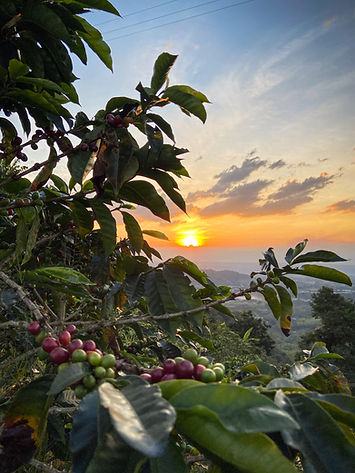
Ethiopia is generally considered the birthplace of Coffea arabica.
Coffee has been growing there for an extremely long time, and Ethiopia has an extraordinary genetic diversity of coffee plants.
You'll often see Ethiopian coffees described simply as “heirloom varieties.”
This isn't really one variety.
It's a convenient umbrella term for the huge number of traditional and locally occurring coffee varieties found across Ethiopia.
And that diversity is one reason Ethiopian coffees can taste so distinctive.
Depending on the region, variety, altitude and processing, you can find coffees that remind you of:
Jasmine. Bergamot. Blueberries. Peach. Strawberry. Mango. Citrus. Chocolate.
Sometimes several of them in the same cup.
Which is considerably more interesting than “tastes like coffee.”
Why Yirgacheffe keeps pulling me back
One of Ethiopia's most famous coffee-producing areas is Yirgacheffe.
And within Yirgacheffe you'll find smaller coffee-producing areas such as Aricha.
We've bought coffee from Aricha before, and I've found myself coming back to it.
The coffees can have that combination I really enjoy in Ethiopia: plenty of fruit and aroma, but still enough sweetness and body to make them very drinkable.
Our latest lot takes things a little further.
Because this time we've added fermentation to the equation.
🫙 So... what is anaerobic coffee?
Our Aricha coffee was anaerobically fermented.
Which sounds like something that should probably happen in a laboratory.
The basic idea is actually quite simple.
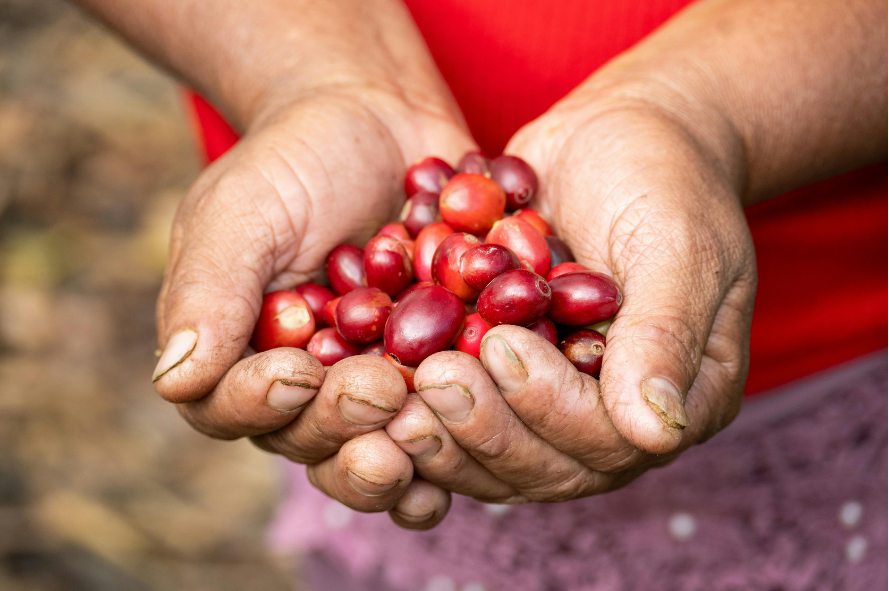
Coffee cherries are placed into sealed containers—in this case, plastic barrels—where oxygen is heavily restricted.
Our coffee spent around nine days fermenting before being removed and dried for approximately 13–18 days.
During fermentation, microorganisms interact with the sugars in and around the coffee cherry.
That process can have a dramatic effect on flavour.
And when I say dramatic, I mean it.
Anaerobic coffees can be incredibly fruity, intense and sometimes quite funky.
They're not always subtle.
They're also not automatically better just because somebody fermented them in a barrel.
Like everything in coffee, the important question is:
Does it taste good?
Fortunately, this one does.
What does this one actually taste like?
When we cupped this coffee, the first thing I noticed was that underneath all the fruit there was a really pleasant chocolate base.
Then the fruit starts appearing.
Tropical fruit. Mango. Red fruits.
It has a full body with medium acidity, so despite all those fruity flavours it doesn't become overwhelmingly sharp.
That's something I particularly like about it.
It's interesting enough to sit there analysing it...
...but you can also just drink the coffee.
An occasionally underrated quality.
And apparently we're not the only ones who liked it
This coffee received a Q-grade score of 89.25.
That's an extremely high score.
But I always have slightly mixed feelings about putting numbers on coffee.
Scores are useful.
They give buyers and roasters a common language for assessing quality and comparing coffees.
But 89.25 doesn't tell you whether you're going to love drinking it.
You might prefer an 84-point chocolatey Brazilian coffee to an 89-point floral Ethiopian coffee.
That's completely fine.
Coffee isn't a maths exam.
For me, the score tells me that we're working with an exceptional quality coffee.
The cup still has to do the rest.
Filter or espresso?
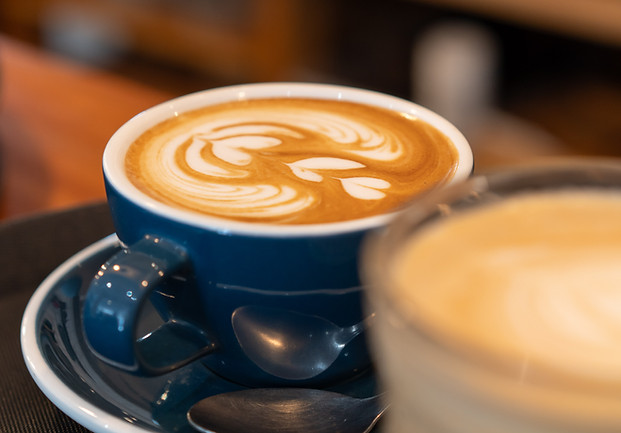
We roast this coffee so you can brew it as filter or espresso.
But you're going to get quite different experiences.
As a filter, I'd expect more of the fruit, aroma and clarity to come forward. This is where I'd start if you really want to explore what the coffee has to offer.
As espresso, those flavours become more concentrated and intense, with more body.
Personally?
I'd try both.
That's half the fun.
Don't drink it too hot
One tip if you're brewing a coffee like this:
Let it cool.
Seriously.
Take a sip when it's hot.
Then leave it alone for a few minutes and taste it again.
As coffee cools, you'll often find that individual flavours become considerably easier to identify.
That mango you thought we invented for the label might suddenly make a little more sense.
And if you don't taste mango?
That's also fine.
Maybe it reminds you of peach.
Maybe strawberry.
Maybe just “something fruity.”
Tasting notes are supposed to help you understand coffee, not test whether you're qualified to drink it.
Why I keep buying Ethiopian coffee
After years of roasting coffee, Ethiopia still has the ability to surprise me.
That's probably why we keep coming back.
You can put several Ethiopian coffees next to each other and find completely different flavours depending on where they were grown, the varieties involved and how they were processed.
And every now and then you taste one that reminds you of that first realisation I had when I discovered specialty coffee:
I didn't know coffee could taste like this.
That's a pretty good reason to keep a bag around.
— Henning Al-Gharb Coffee Roasters, Algarve
☕ Want to understand what's actually in your cup?
Join The Friday Filter.
One useful coffee tip every Friday from the Al-Gharb Coffee Roasters.
Beans, brewing, tasting, roasting and the occasional strange thing we've discovered in a cup.
No coffee snobbery. Just better coffee.



Comments