

Why Does My Espresso Taste Bad?

Updated: Sep 19
Sour? Bitter? Watery? Running too fast? Here's how to diagnose a bad espresso—and what to change first.
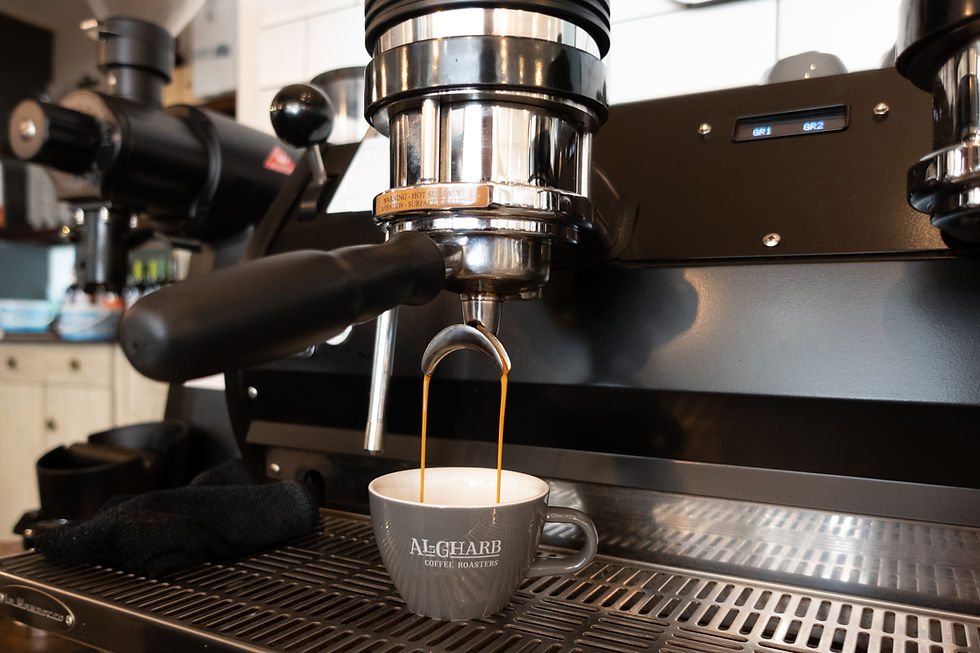
You buy good coffee. You warm up the espresso machine. Grind the beans, pull the shot, take a sip…
And it's horrible.
Sour. Bitter. Watery. Maybe all three.
Before blaming the coffee, throwing your grinder out of the window or spending €3,000 on a new espresso machine, there are a few things worth checking.
Espresso is surprisingly sensitive. A small change in grind size, dose or yield can turn a terrible shot into a very good one.
The good news is that most bad espresso can be fixed.
So, let's troubleshoot it.
☕ The quick espresso fix
Your espresso… | Most likely cause | Try this first |
|---|---|---|
Tastes sour | Under-extracted | Grind finer |
Tastes bitter/dry | Over-extracted | Grind coarser |
Runs too fast | Grind too coarse | Grind finer |
Runs too slowly | Grind too fine | Grind coarser |
Tastes weak/watery | Ratio/extraction issue | Use less water / check dose |
Tastes harsh/burnt | Dark roast / high temperature | Lower temperature or try a lighter roast |
And before doing anything else:
Change one thing at a time.
If you change the grind, dose, temperature and yield together, your next espresso might taste better—but you'll have absolutely no idea why.
First, a little bit about extraction
Espresso is basically hot water being pushed under pressure through finely ground coffee.
Sounds simple.
Unfortunately, we've managed to make it considerably more complicated than that.
As water passes through the coffee, it dissolves different compounds. Very roughly speaking, some of the brighter, acidic flavours are extracted earlier, followed by sweetness and balance, while longer extraction can increasingly bring out bitter and drying flavours.
Think of it something like this:
Sour & sharp → Sweet & balanced → Bitter & dry
This is a simplification. Coffee extraction is considerably more complicated and somebody with a refractometer will probably already be getting upset with me.
But for fixing your espresso on a Sunday morning, it's useful.
😖 My espresso tastes sour
A sour espresso usually means we haven't extracted enough from the coffee.
This is especially obvious when the espresso tastes aggressively sharp rather than pleasantly fruity or acidic.
There's an important difference.
A good Ethiopian coffee, for example, might naturally have a bright acidity. That doesn't mean it's under-extracted.
But if the shot makes you pull the same face as biting into a lemon, we probably have some work to do.
1. Grind finer
This is the first thing I would change.
A finer grind creates more resistance to the water, generally slowing down the shot and increasing extraction.
Make a small adjustment.
Pull another espresso.
Taste it.
Better?
Good. You're heading in the right direction.
2. Check your recipe
A useful starting point for espresso is roughly:
18g coffee in → 36–40g espresso out
That's around a 1:2 ratio.
It is not a law.
You will not be arrested by the coffee police for pulling 42g.
It's simply a useful place to start because it gives you something repeatable to work from.
3. Try a little more water
If the espresso is still sour, you can allow slightly more water through the coffee.
For example:
18g in → 36g out
might become:
18g in → 40g out
Taste again.
4. Check your temperature
If your machine allows temperature adjustment, around 92–93°C is a good starting point.
Lighter roasted coffees can sometimes benefit from slightly higher temperatures because they're generally more difficult to extract.
But again: change one thing at a time.
😬 My espresso tastes bitter
Now we have the opposite problem.
If the espresso tastes unpleasantly bitter, harsh or leaves your mouth feeling dry, you may be extracting too much.
So we start moving in the other direction.
1. Grind slightly coarser
This is normally the first thing I'd try.
Don't make a huge adjustment.
A small change to your grinder can make a surprisingly large difference to espresso.
2. Shorten the shot
If you're currently making:
18g in → 45g out
try stopping closer to:
18g in → 36g out
Then taste.
You may find the espresso becomes sweeter and fuller.
3. Try a slightly lower temperature
Particularly with darker roasted coffee, lowering the temperature can sometimes reduce harshness and bitterness.
4. Look at your beans
Sometimes your espresso tastes bitter because the coffee itself has been roasted very dark.
Look at the beans.
If they're extremely dark and covered in oil, some of that smoky, roasty bitterness may simply be part of the coffee.
No amount of grinder adjustment is going to turn a very dark roast into a light, fruity Ethiopian coffee.
💦 My espresso tastes weak or watery
Weak espresso is slightly more complicated because strength and extraction aren't exactly the same thing.
But I'd start with the basics.
Check how much coffee you're putting into the basket and how much espresso you're getting out.
If you're putting 18g in and getting 70g out, you're making something very different from a traditional espresso.
Try reducing the yield.
Also check the age of the coffee, your grind and your puck preparation.
If water finds an easy route through part of the coffee puck—what we call channeling—you can end up with an espresso that manages to taste weak, sour and bitter at the same time.
Quite an achievement.
🏎️ My espresso runs too fast
Let's say you're using:
18g coffee
and you get:
40g espresso in 15 seconds.
Start by grinding finer.
Your coffee isn't creating enough resistance, so the water is rushing through.
Don't immediately start changing your dose, temperature and everything else.
Grind a little finer and try again.
As a rough starting point, something around 25–30 seconds can be useful.
But remember: time is a diagnostic tool, not the goal.
If your espresso tastes fantastic at 23 seconds, please don't ruin it just to make your stopwatch happy.
🐌 My espresso runs incredibly slowly
If your machine is struggling and you're getting a few miserable drops of espresso after 40 or 50 seconds, you've probably gone too far in the other direction.
Start by grinding coarser.
Again, make a small adjustment.
Espresso grinders can be sensitive. Moving several steps at once can take you from no espresso at all to something resembling coffee-flavoured tap water.
Your coffee might actually be too fresh
This surprises people.
We spend so much time telling everyone that coffee should be fresh that it's easy to assume coffee tastes best five minutes after it leaves the roaster.
Not necessarily.
Freshly roasted coffee releases CO₂, and very fresh coffee can behave unpredictably when you're trying to make espresso.
At Al-Gharb, we generally allow our espresso coffees to rest for at least 10 days after roasting before using them in the café.
Different coffees and roast styles behave differently, so there isn't one magical number.
But if you're struggling to dial in a bag roasted yesterday, the solution might simply be:
Wait.
For once, fixing your espresso requires doing absolutely nothing.
I don't chase numbers
Recipes are useful.
Scales are useful.
Extraction times are useful.
Temperatures are useful.
But they are tools—not commandments.
If someone tells you espresso must be exactly 18g in, 36g out, at 93°C in exactly 28 seconds, they're giving you a starting recipe.
They're not describing every good espresso that has ever existed.
Coffee is agricultural. Different origins, varieties, processes, roast levels and ages behave differently.
So use the numbers to help you understand what is happening.
Then try and taste, try and taste.
The most important espresso rule
After all of this, there's one rule that matters more than everything else:
If your coffee tastes good, you're doing it right.
If your espresso tastes fantastic at 22 seconds, drink it.
If you prefer a longer 1:2.5 ratio, make it.
If somebody on the internet says your espresso is technically wrong while you're happily drinking it, I know whose opinion I'd worry about less.
Taste first.
Numbers second.
And if it tastes terrible?
Well, now you know where to start.
— Henning Al-Gharb Coffee Roasters, Algarve
☕ Want to make better coffee at home?
Join The Friday Filter.
One useful coffee tip every Friday from the Al-Gharb Coffee Roasters.
Brewing advice, coffee experiments, things we've learned from roasting—and occasionally things we've learned by getting it completely wrong.
No coffee snobbery. Just better coffee.


_edited_edited.png)


Comments