
How to Choose Coffee for Your Coffee Shop

Updated: Oct 21
Choosing coffee for your coffee shop sounds like one of the enjoyable jobs.
Taste a few coffees. Pick your favourite. Order some bags.
Then you discover that your favourite espresso disappears in a large latte, another coffee needs more attention than your busy team can give it, and the one everyone agreed on is only available for a few more weeks.
There are plenty of excellent coffees. Finding the right one for your café means thinking about how you’ll serve it, who will drink it and what support you need.

How to Choose Coffee for Your Coffee Shop
Here’s where I would start.
1. Start with your customers
Before asking which coffee to buy, ask what your customers are looking for.
Are they collecting a quick morning espresso? Sitting down with a cappuccino and breakfast? Looking for a familiar flavour? Coming specifically to explore specialty coffee?
You may serve all of these people, but understanding your main trade helps narrow the choice.
If most orders contain milk, that needs to influence your tasting. If filter coffee is central to your concept, give it proper attention too.
Your own preferences matter. You’ll be serving the coffee and talking about it every day.
But you aren’t the only person who will drink it.
2. Decide what you want the coffee to taste like
“Good coffee” is a reasonable ambition. It isn’t a particularly detailed brief for a roaster.
Try describing the experience you want.
Perhaps you’re looking for chocolate, caramel and a rounded body. Perhaps you want brighter fruit flavours. You might want an approachable house coffee alongside something more adventurous.
There isn’t one flavour profile that every café should serve.
Tell your roaster about your customers, menu and preferences. If you already have a coffee you enjoy, explain what you like about it. If there’s something you want to change, explain that too.
You don’t need impressive tasting vocabulary. “We want something sweeter and less roasty” is a useful place to begin.
3. Blend or single origin?
Both can make excellent house coffees.
A blend allows a roaster to combine coffees to achieve a particular flavour and structure. A single origin offers a way to showcase coffee from a particular country, region, producer or lot.
Neither description guarantees that a coffee will be more consistent, more interesting or better suited to your customers.
Ask what the coffee is designed to do.
Does it work well with milk? Is it available throughout the year? What changes when a new harvest arrives? How does the roaster maintain the intended flavour?
Some cafés choose a blend as their main espresso and offer a changing single origin alongside it. Others build their offer around single origins.
Choose an arrangement your customers enjoy and your team can manage.
4. Taste it as you intend to serve it
If your café sells cappuccinos, taste the coffee as a cappuccino.
That sounds obvious. It’s still easy to become absorbed in an espresso tasting and forget how most customers will experience the coffee.
Milk changes the balance of the drink. A coffee you love black may become less distinctive in a larger milk drink. Another may deliver exactly the sweetness and body you wanted.
Test your usual cup sizes and milk quantities. Include the milk alternatives you regularly serve, because they can change the experience too.
If you sell filter coffee, evaluate that separately using an appropriate recipe.
One tasting bowl can tell you something about a coffee. It can’t tell you everything about your menu.
5. Compare coffees fairly
Give each candidate a reasonable chance to perform.
Use suitable water, clean equipment and an appropriate recipe. Ask the roaster for a starting point, then record any adjustments.
Forcing every coffee through exactly the same recipe may tell you which one suits that recipe. It doesn’t necessarily show what each coffee can offer.
Keep notes simple:
What to compare | What to record |
Black coffee | Sweetness, acidity, bitterness, body and overall enjoyment |
Milk drinks | Balance and flavour in your actual serving sizes |
Preparation | Recipe, adjustments and ease of repeating the result |
Customer fit | Who you think would enjoy it and why |
Team feedback | Preferences, concerns and questions |
Taste together where possible. Discuss differences without turning the exercise into a competition to identify the most obscure fruit.
The useful question is: Would we be happy serving this, repeatedly, to our customers?
6. Try it in your working setup
A tasting at the roastery is a good beginning. A trial on your own equipment adds another layer of information.
Your grinder, water, machine and service routine all influence the result.
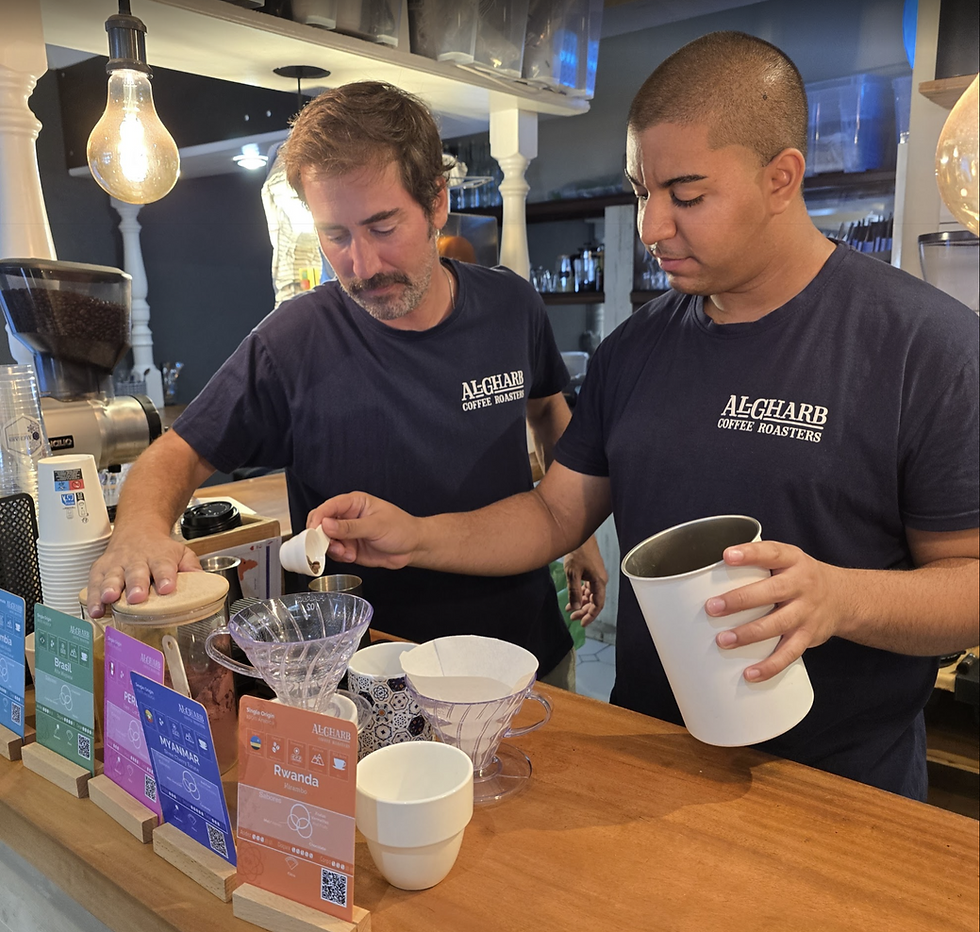
Involve the people who will prepare the coffee. Can they follow the recipe? Do they understand what a good result tastes like? Can they recognise when an adjustment is needed?
Keep a written recipe and communicate changes between shifts. Our article about coffee shop recipes explains why that reference point matters.
An excellent coffee still needs a workable routine behind it.
7. Compare the cost of serving it
The price per kilogram matters, but it isn’t the whole comparison.
Consider the dose you use, coffee used during dialling in, stock you may not finish and the quantities you need to order.
A larger order may look attractive until part of it sits on the shelf longer than you intended.
Ask about pack sizes, delivery charges and order frequency. Think about how those arrangements fit your storage and sales.
The aim is to understand what you’re buying and how you’ll use it—not simply to find the lowest number on a price list.
8. Choose the supplier as well as the coffee
You’re likely to need more from a supplier than a delivery of beans.
Before deciding, ask:
What are the minimum order quantities and delivery lead times?
How much notice should we give before ordering?
What happens if our usual coffee becomes unavailable?
How are changes to coffees or blends communicated?
What training and dialling-in support are available?
Is there help with equipment, and what does that support include?
Can we trial the coffee before committing?
Be clear about your expectations and ask the supplier to be clear about theirs.
A helpful working relationship makes it easier to handle changes, ask questions and keep the coffee tasting as intended.
9. Make sure your team can explain the choice
Once you’ve chosen a coffee, share the reasons with your staff.
Taste it together. Explain the flavour profile, where it comes from and why it suits your menu.
Give the team a short description they understand, rather than a sales paragraph they have to recite.
If a customer asks why you serve this coffee, “Because it works beautifully with milk and we love its chocolatey sweetness” is a perfectly good answer.
Our barista-training guide explores how to build that knowledge alongside practical skills.
Your coffee-selection checklist
Before making the decision, check that you can answer these questions:
Does the flavour suit our customers and concept?
Have we tasted it in our main drinks and cup sizes?
Have we tested it on our equipment?
Can the team prepare it consistently?
Do the ordering arrangements suit our sales and storage?
Do we understand availability and possible seasonal changes?
Are the training and support arrangements clear?
You don’t need a coffee that wins every tasting conversation.
You need one you’re proud to serve, supported by a routine and a supplier that work for your business.
Choose a coffee you can build on
A prestigious origin, unusual process or impressive score can give you a reason to investigate a coffee. None of them can make the decision for you.
Taste it. Put it in your usual drinks. Listen to your team. Ask the practical questions.
Then choose with a clear understanding of why it belongs on your menu.
That makes it much easier to serve the next cup with confidence.
— Henning Al-Gharb Coffee Roasters, Algarve
Looking for coffee for your business?
Explore Al-Gharb’s wholesale coffee and business support, including equipment, barista training and ongoing support.
Tell us about your customers, your menu and your setup. We can start the conversation there.
Sign up using the form below for useful coffee tips, brewing advice and discoveries from the roastery.
No coffee snobbery. Just better coffee.






Comments